
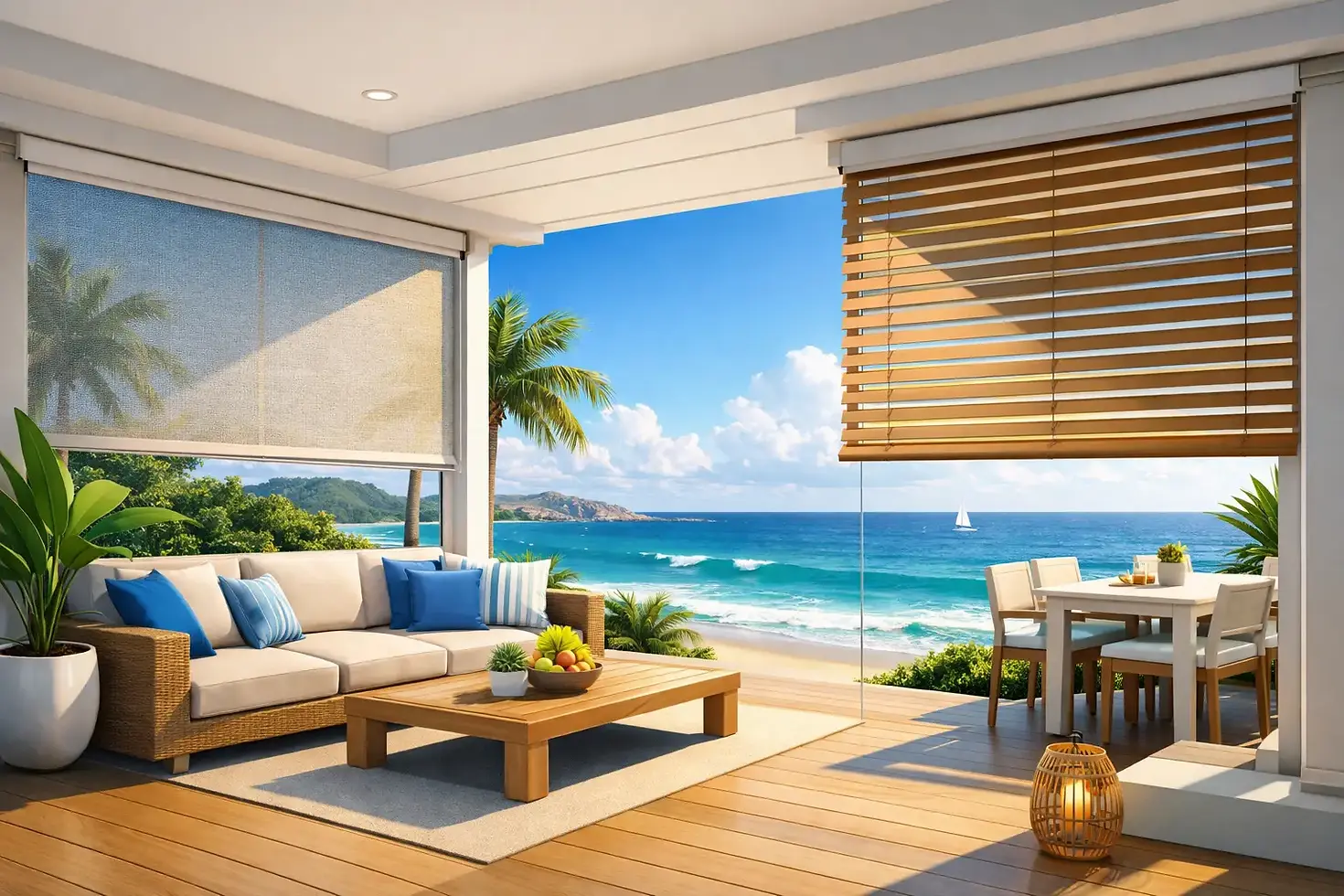
How to Choose Patio Blinds for Coastal Homes
- Chris Keast
- 6 days ago
- 6 min read

A patio can look inviting at 8 am, then become too bright, hot or breezy to enjoy by lunchtime. That is why learning how to choose patio blinds starts with the way you actually use your outdoor area, not simply with a colour chart. For homes around Bargara, Bundaberg and the wider coastal region, the right outdoor blind can make the difference between a patio you admire and one you use through more of the year.
Good patio blinds bring shade, privacy and comfort together without closing off the relaxed indoor-outdoor feel that makes Queensland living so appealing. The best choice depends on your patio’s direction, exposure to wind and rain, the amount of privacy you need, and how permanent you want the solution to feel.
Start with the problem your patio needs to solve
Before comparing fabrics, tracks or colours, spend a few days noticing what happens on your patio. Is the afternoon sun glaring through from the west? Does a southerly breeze make dinner outside unpleasant? Are neighbours able to see straight into the entertaining area? Or is the main issue rain blowing across the outdoor table?
A single patio can have more than one challenge. For example, a north-facing area may need strong sun protection in summer but still benefit from soft winter light. A coastal patio might be exposed to salt air and wind, while a backyard entertaining zone may need privacy without sacrificing airflow.
This is where a custom solution has an advantage over an off-the-shelf blind. Properly fitted outdoor blinds can be specified for the opening, the conditions and the way your family lives. You are not trying to make a standard-size product work around posts, uneven surfaces or a particularly exposed corner.
Consider the sun direction before choosing fabric
Sun control is usually the first reason homeowners look at patio blinds. The direction your patio faces will affect the type of coverage you need and when you need it most.
West-facing patios often need the strongest protection. Low afternoon sun creates glare, heats up paving and makes it hard to sit comfortably outdoors. A quality outdoor mesh blind can cut the glare and heat while still allowing you to see out to the garden or pool area.
North-facing patios receive more consistent sun. Depending on the roofline, you may want blinds that can be lowered during the hottest parts of the day and raised when you want more winter warmth. East-facing areas benefit from morning sun control, particularly if you use the patio for breakfast or if light reflects into adjoining rooms.
It is worth looking beyond the patio itself. If sun is streaming through the outdoor area and into the home, patio blinds may also help make nearby living spaces more comfortable and reduce the workload on cooling systems.
Choose between visibility, privacy and block-out
Outdoor blind fabrics are not all designed to do the same job. The right level of openness is a practical decision, not just a style preference.
Mesh or sunscreen fabrics are popular because they soften heat and glare while maintaining outward visibility during the day. They suit homeowners who want to keep a view of the yard, garden or coastal outlook, and they can help a patio feel open rather than enclosed. The trade-off is that mesh will not provide complete privacy at night when indoor or patio lights are on.
For stronger privacy or weather protection, a more solid material may be appropriate. Clear PVC can help keep wind and rain out while preserving a view, making it useful for areas that need a more enclosed feel. However, PVC does not provide the same airflow as mesh and can create more warmth when closed in direct sun. It works best when used thoughtfully, such as on the most exposed side of a patio rather than around every opening.
If your priority is privacy from nearby homes, consider sightlines at seated and standing height. A blind that stops glare may not block the neighbour’s view into your dining area. During an on-site measure, this is the sort of detail that can be assessed before the blind is made.
How to choose patio blinds that handle local weather
Queensland weather can be generous one minute and demanding the next. Heat, summer storms, wind-driven rain and coastal conditions all place pressure on outdoor furnishings. Patio blinds should be selected with the location in mind, not only the look you want on installation day.
For exposed patios, guided systems such as Zipscreen outdoor blinds are a strong option. The fabric is held within side channels, helping create a neat finish and reducing gaps along the edges. This can improve protection from sun, insects, breezes and light rain compared with a loosely hanging blind.
No outdoor blind should be treated as a substitute for a solid wall during severe weather. In strong winds or storms, blinds may need to be raised according to the manufacturer’s guidance. A local installer can explain the operating limits of the chosen system and recommend the most suitable arrangement for your particular exposure.
Coastal homes should also consider the quality of components, fittings and fabric. Salt air can be tough on exterior products, so choosing well-made materials and professional installation is a sensible investment. A blind that sits correctly, operates smoothly and has the right tension from the start is more likely to keep looking and working as it should.
Think about operation before installation day
The way a patio blind operates has a real effect on how often it gets used. If it is awkward to raise, difficult to align or inconvenient to secure, it may spend most of its time in one position.
Manual operation can be a practical, down-to-earth choice for many homes, particularly for smaller or easily reached openings. Motorised operation can suit larger spans, higher openings or households that want to adjust several blinds quickly as the sun moves. It can also be helpful when a patio is used often for entertaining and you want to change the setting without interrupting the moment.
Think about everyday access too. Does the blind cover the main path to the clothesline, backyard or side gate? Will it need to be raised frequently for children, pets or outdoor furniture? The position of the controls and the height of the blind when open should be planned around how the space works, not treated as an afterthought.
Get the fit right around posts, ceilings and paving
Patios are rarely simple rectangles. There may be timber or steel posts, raked ceilings, exposed beams, downpipes, uneven paving, sliding doors or a narrow return at one end. These details are exactly why careful measuring matters.
A custom-made blind should look like it belongs with the home. The fabric, channels and brackets need to be placed with both function and finish in mind. A good installation considers how the blind meets the patio structure, whether there are gaps that will let in unwanted sun or rain, and how the system will look from inside the house as well as from the yard.
This is also where trade-qualified installation makes a difference. Sometimes the best result requires more than fitting a blind to the nearest available surface. The supporting structure may need attention, or a practical adjustment may be needed to create a cleaner, more durable finish.
Match the colour to your home and your lifestyle
Patio blinds are highly visible, especially when they frame an outdoor entertaining area. Choose a colour that works with your roof, fascia, paving, exterior cladding and window frames, but do not feel limited to an exact match.
Darker mesh fabrics often offer better outward visibility during the day because they reduce reflected light. They can create a more defined, contemporary frame around the patio. Lighter colours can feel softer and may suit a brighter exterior palette, although they can show marks more readily in busy family areas.
Consider maintenance honestly. If the patio sits near a sandy yard, pool, barbecue or children’s play area, choose a finish that suits real life. Outdoor blinds generally need regular gentle cleaning to remove dust, salt and debris. Keeping tracks clear and operating the blinds as intended will help maintain smooth performance.
Set a budget around value, not just the first price
The cheapest patio blind can become expensive if it does not fit properly, struggles in the conditions or needs replacing early. Price will vary depending on the number and size of openings, fabric selection, operating system, site access and installation requirements.
It is useful to compare what is included. Is the blind made to measure? Are the side channels, hardware and installation part of the quote? Has someone assessed the patio in person? A clear quote gives you a better basis for deciding than a headline price alone.
For homeowners who want a polished result without unnecessary fuss, working with a local team can make the process much easier. Keast Shutters & Blinds can help turn the practical questions about sun, privacy, weather and style into a solution made with you and your home in mind.
A patio blind should not make your outdoor area feel shut away. The right one gives you more choice: shade when the sun is fierce, shelter when the breeze picks up, privacy when you want it, and an open view when the day is too good to miss.


Comments