
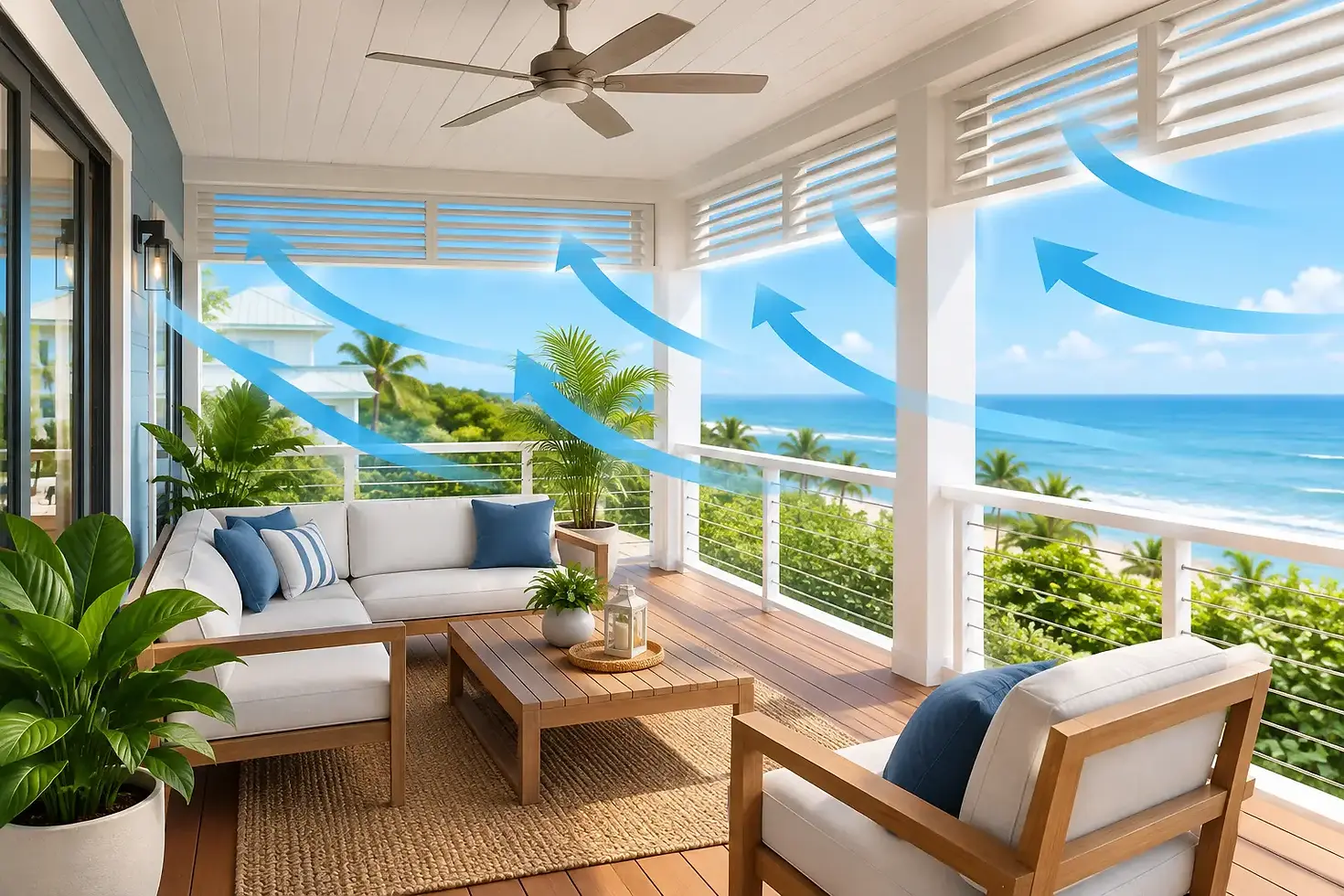
How to Improve Veranda Airflow in Coastal Homes

A veranda should be the part of the home that catches the afternoon breeze, not the place everyone avoids once the heat settles in. Around Bargara and Bundaberg, a well-positioned outdoor area can make a big difference to daily comfort. Knowing how to improve veranda airflow often comes down to looking beyond a single fan or blind and considering how air enters, moves through and leaves the space.
The good news is that better airflow does not have to mean leaving your veranda completely open to glare, wind-driven rain or nosy neighbours. With the right layout, screening and custom-fitted furnishings, you can create an outdoor area that feels protected without becoming stuffy.
Start by working out what is stopping the breeze
Before choosing a product, spend time on the veranda at different points of the day. Coastal breezes can shift with the weather, while a hot western afternoon may feel very different from a still summer morning. Notice where the breeze enters, where it seems to stop, and which areas receive the strongest sun.
Solid walls, deep side fences, bulky outdoor furniture and fully enclosed screens can all interrupt air movement. Sometimes the issue is not a lack of breeze outside the home, but the fact that there is no clear path for it to travel through the veranda. Air needs an entry point and an exit point. If one side is shut tight, warm air can linger under the roof.
Also consider whether heat, rather than airflow alone, is the real problem. A veranda can feel stagnant when dark paving, a low roof or unshaded western sun is radiating heat back into the space. Reducing that heat load often makes a gentle breeze feel far more effective.
How to improve veranda airflow with adjustable screening
Outdoor blinds are a practical option when you want flexibility rather than a permanently enclosed veranda. The key is choosing a system that lets you respond to the conditions on the day.
Custom-fitted Zipscreen outdoor blinds can provide shade, privacy and weather protection while still allowing you to raise or lower each blind as needed. On a breezy day, you might leave the windward side partly open to admit fresh air and lower the sunnier or more exposed side to cut glare. When a shower blows through, the blinds can be lowered for protection, then opened again once it passes.
This adjustability matters. Fixed, solid barriers may solve one problem but create another by trapping heat. A screen that can be positioned to suit the direction of the sun and breeze gives you more control over comfort throughout the year.
Fabric choice also deserves some thought. Mesh-style outdoor fabrics can soften harsh light and offer daytime privacy while maintaining a visual connection to the garden. They will not feel as open as a bare veranda, but they can be a good middle ground for homes where direct sun is the bigger issue. Clear PVC can provide valuable rain and wind protection, particularly in a covered entertaining area, though it is generally best used selectively or opened in warmer conditions to avoid heat building up.
The right answer depends on the orientation of your home, how exposed the veranda is and whether you use the area mainly for family meals, quiet mornings or weekend entertaining.
Leave a path for cross-ventilation
Cross-ventilation is simply the movement of air from one opening to another. It is one of the most effective ways to make a covered outdoor space feel fresher, especially when the roof holds onto heat.
If your veranda has openings on two or more sides, avoid closing them all at once. Try opening the side facing the breeze and leaving an opening on the opposite side for warm air to escape. Even a modest gap can help create a more noticeable flow.
For a veranda that sits against the house, look at the doors and windows that connect indoors and out. Opening a nearby sliding door, louvre window or window furnishing at the right time can encourage air to move through both spaces. Of course, security, insects and privacy need to be considered, particularly at night. The aim is to use openings safely and sensibly, not to leave the house exposed.
Ceiling fans can support this airflow, but they work best as part of the overall plan. A fan moves air around your seating area, while well-positioned openings allow the warmed air to move away. If you are adding a fan, choose a model rated for outdoor use and have it installed by a qualified electrician.
Reduce the heat that makes a veranda feel still
A cooler veranda is usually a more comfortable veranda, even when the breeze is light. Start with the surfaces that cop the most sun. Western-facing openings often need particular attention in Queensland homes, as the late-day sun can turn an inviting entertaining space into a hot box.
Adjustable outdoor blinds can cut glare and direct sun before it reaches the furniture, flooring and walls. This helps prevent those surfaces from storing heat and releasing it back into the space later. Pair this with lighter-coloured outdoor furnishings where possible, as darker materials can become surprisingly hot under a covered area.
Shade from planting can help too. A well-placed tree, climbing plant or garden bed can cool the outlook around a veranda without blocking every bit of breeze. Avoid dense planting directly in front of the main airflow path, though. The goal is filtered shade and a softer edge to the space, not another solid wall.
If your veranda roof is low, has little insulation or gets full afternoon sun, you may need to address that before expecting blinds alone to solve the problem. A local trade professional can help identify whether heat transfer from above is the main culprit.
Arrange the veranda so air can move around people
Outdoor furniture has a bigger impact than many homeowners expect. A large lounge pushed across the open side of the veranda, tall storage cabinets or thick full-length curtains can block the very breeze you are trying to catch.
Keep the main path from one opening to another reasonably clear. Place bulky furniture against solid walls where possible, and use more open-legged tables and chairs in the centre of the space. This does not mean the area has to feel sparse. It simply gives air room to move at the level where people sit and relax.
If you regularly entertain, consider creating separate zones rather than filling every corner. A dining setting near the breeze path may be ideal for summer lunches, while a more sheltered lounge area can sit closer to a screened side. That arrangement gives everyone options when the weather changes.
Get the fit right around posts, beams and uneven openings
Outdoor screening only works as well as its fit. Verandas often have posts, angled roof lines, uneven surfaces or older framing that make standard-sized products a poor match. Gaps can let in glare and rain, while a poorly aligned blind may be difficult to operate and less effective over time.
A tailored measure and installation allows the system to suit the actual structure of your home, including where the breeze comes from and how you want to use the space. Keast Shutters & Blinds can help homeowners weigh up fabric, orientation, privacy and practical operation, rather than treating every veranda as the same rectangle.
Good finishing also matters for airflow. A screen positioned too close to a doorway, a blind that cannot be easily adjusted, or hardware that clashes with existing features can discourage you from using the system properly. The best solution is one that feels simple enough to change as the weather does.
A practical approach for changing Queensland weather
There is no single setting that works all day, every day. On a hot, still afternoon, opening opposite sides, switching on the fan and lowering the western blind may be the most comfortable combination. When a southerly change arrives, you may prefer to lower the exposed side and keep the sheltered end open.
Think of your veranda furnishings as tools you can adjust, not fixed barriers. That flexibility lets you enjoy the breeze when it is welcome, dial back the glare when it is not, and keep the area useful through more of the year.
A comfortable veranda should suit the way your household actually lives. A few well-considered changes can turn it from a space you pass through into the spot where the afternoon catch-up, family dinner or quiet cuppa naturally happens.

Comments