
How to Select Blind Opacity for Your Home

A bright Bundaberg morning can be lovely until the glare lands straight across the television, kitchen bench or home office desk. Learning how to select blind opacity starts with that real-life moment: deciding how much light, heat, privacy and outside view you want to keep in each part of your home. The right answer is rarely the same for every window.
Opacity is not just about choosing between light and dark fabric. It shapes how a room feels through the day, how private it is after dark, and how comfortable it is through a Queensland summer. A well-chosen blind can soften harsh sun without making the house feel closed in. A poor match can leave you squinting at screens or reaching for the air conditioner earlier than you would like.
What blind opacity actually means
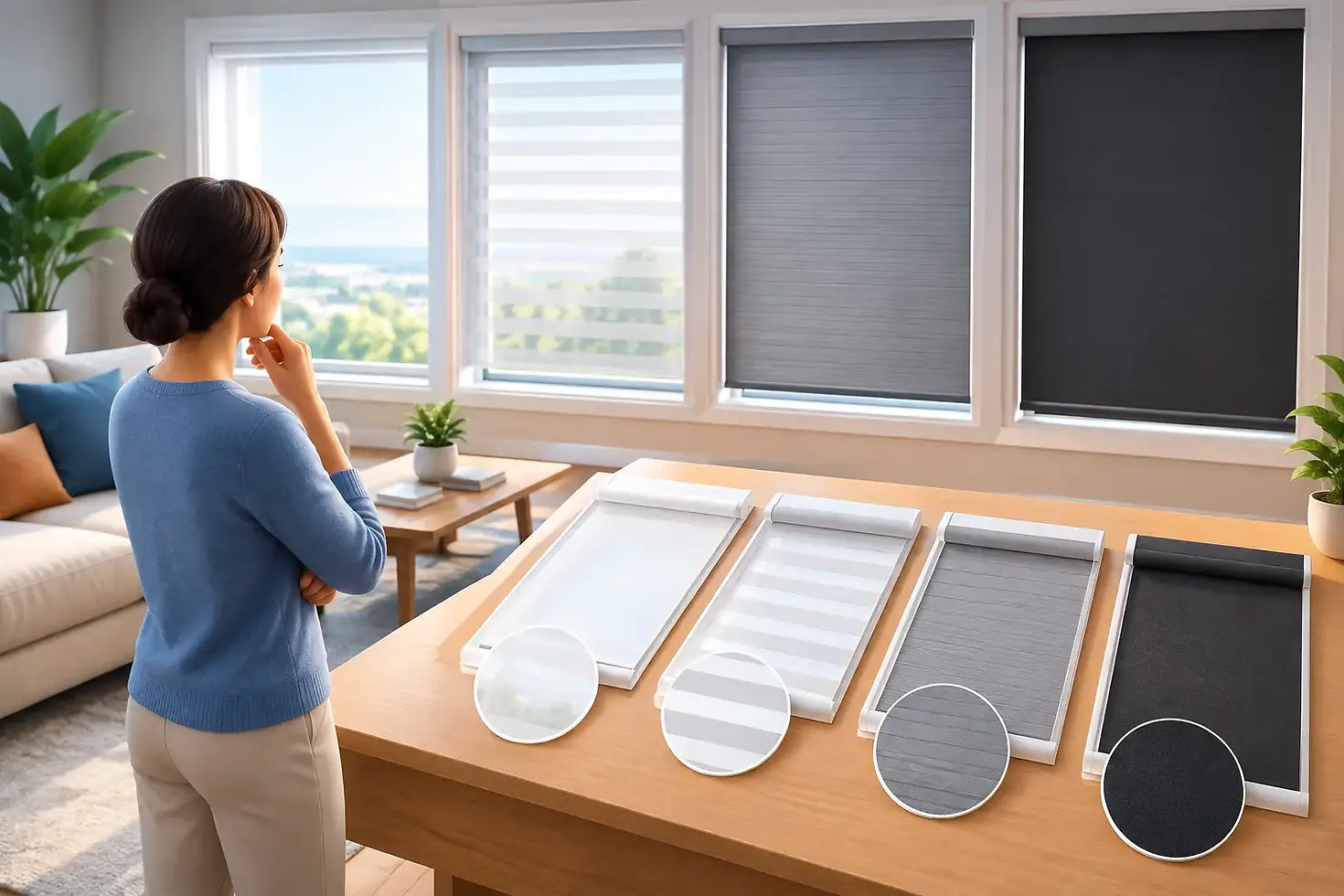
Blind opacity describes how much light and visibility a fabric allows through. At one end are sheer and sunscreen-style fabrics, which filter sunlight while retaining some connection to the outdoors. At the other are blockout fabrics, designed to stop light passing through the blind itself. In between sit translucent fabrics, which bring in soft daylight but obscure clear views.
It helps to separate three things that are often grouped together: light control, view and privacy. A fabric may reduce glare beautifully but still allow a view out during the day. Another may give daytime privacy while offering very little privacy once lights are on inside at night. This is why choosing by fabric colour alone can be misleading.
For roller blinds and outdoor screens, you may also hear about an openness factor. This refers to the small gaps in a mesh fabric. A lower openness percentage generally means tighter weave, greater shading and more privacy, while a higher percentage allows more daylight and a clearer outward view. The exact performance depends on the fabric, colour, window direction and surroundings, so samples are worth viewing at the window rather than only under showroom lighting.
How to select blind opacity room by room
Start with what happens in the room, not the look of the blind. The room’s purpose usually points you towards the right level of opacity.
Living areas: soften the sun without losing the view
In living rooms, open-plan dining spaces and kitchens, many homeowners want natural light and an outlook during the day. Sunscreen roller blinds or sheer curtains are often a practical fit. They help cut glare and filter UV while keeping the space open and relaxed.
For west-facing windows, particularly around Bargara and the wider Bundaberg region, afternoon sun can be intense. A tighter sunscreen fabric, or a layered solution with a blockout blind or curtain behind it, gives you options. You can enjoy filtered daylight most of the day, then close the blockout layer when the heat and glare build.
Bedrooms: make sleep the priority
Bedrooms usually call for more control. Blockout roller blinds, blockout curtains or plantation-style shutters with well-fitted blades are popular where early morning light, street lighting or shift work affects sleep.
Keep in mind that blockout fabric only blocks light through the fabric. Light can still appear around the sides, top or bottom of a roller blind if there are gaps. If a very dark room matters, the way the blind is measured, mounted and finished is every bit as important as the material. A professional measure can identify where light leakage is likely and recommend a more suitable arrangement.
A double treatment can be especially useful in main bedrooms. A sheer gives privacy and softness during the day, while a blockout layer takes over at night. It is a polished option for homeowners who do not want to choose between a bright room and a restful sleep.
Bathrooms and street-facing rooms: privacy comes first
Bathrooms, front bedrooms and windows near a neighbour’s fence line need privacy at all hours. Translucent blinds, privacy sheers and shutters can let in daylight while preventing clear views in. For a bathroom, choose materials suited to moisture and easy cleaning as well as the opacity level.
Be cautious with sunscreen fabrics where night-time privacy is essential. During the day, the brighter outdoors can make it difficult for people to see inside. Once indoor lights are on and it is dark outside, the effect can reverse. Add a second privacy or blockout layer if the window is overlooked.
Home offices: reduce glare, keep daylight
A computer screen and direct sun are not a friendly combination. A sunscreen roller blind is often a sensible middle ground for a home office because it reduces glare without turning the space into a cave. For windows facing east or west, a lower openness fabric can give more reliable control when the sun sits low.
Position also matters. If possible, place the desk side-on to the window rather than directly in front of or behind it. The blind should support a comfortable workspace, but the room layout can reduce glare before you even raise or lower a chain.
Match opacity to window direction and heat
The sun does not treat every side of a house equally. East-facing windows get strong morning light, while west-facing windows deal with the hot, low afternoon sun that can linger into the evening. North-facing windows receive consistent sun across much of the year, and south-facing windows tend to have softer light but can still need privacy control.
For hot or exposed windows, external shading can make a noticeable difference to comfort because it intercepts sunlight before it reaches the glass. Outdoor Zipscreen blinds are a popular choice for patios, verandahs and outdoor rooms, as well as exposed openings where homeowners want to manage glare, heat and wind-blown rain without giving up the outlook entirely.
Mesh screen opacity should be chosen with the same care as an indoor sunscreen blind. A more open mesh maintains a clearer view and airflow, while a tighter mesh provides greater shade and daytime privacy. For an entertaining area that faces the afternoon sun, prioritising shade is often worth the small trade-off in outward visibility. On a breezy coastal block, the screen system and installation also need to suit the opening and local conditions, not just the fabric choice.
Do not choose colour separately from opacity
Fabric colour changes how an opacity level performs and feels. Lighter colours can make a room feel airy and may reflect more light, but they can show shadows and silhouettes more readily at night. Darker sunscreen fabrics often offer a sharper view through to the outside during daylight, although they may absorb more heat and create a moodier interior.
There is no universal best colour. A pale sunscreen may suit a light-filled coastal living room, while a charcoal screen can suit a media room or a western patio where glare control is the priority. Hold full-sized samples against the glass at different times of day. Look from both inside and outside, and check them again when the room lights are on.
Consider layers when one blind has to do too much
Some windows have competing needs. You may want an open view at breakfast, privacy in the evening, warmth and softness in the room, and a darker space for watching a film. Expecting one fabric to handle every job can lead to compromise.
Layering is often the more practical answer. A sunscreen roller blind paired with a blockout roller blind gives separate daytime and night-time control. Sheers with blockout curtains offer a softer, more decorative result. Verishades can also suit wide openings where adjustable light, privacy and easy access to doors are all part of the brief.
Layers do add to the overall investment and require enough space around the window for the chosen tracks or brackets. In return, they give your home greater flexibility through changing seasons, shifting daylight and everyday family life.
Measure and installation affect the final result
Opacity on a sample card is only half the story. A blind that is too narrow, mounted in the wrong position or poorly aligned will not provide the privacy or light control you expected. This is particularly noticeable with blockout blinds, outdoor screens and large sliding-door openings.
Custom-made window furnishings allow for the window frame, handles, recess depth, door operation and nearby walls. They also provide a cleaner finish, which matters in a home you have renovated carefully. An experienced installer can flag practical details early, such as whether a blind needs to clear a crank handle, where an outdoor screen will stack, or how to keep access through a patio opening easy.
Before deciding, stand in the room at the times you use it most. Notice the direction of the sun, what neighbours can see, whether you value the view, and how often you need a darkened space. Keast Shutters & Blinds can help turn those observations into a made-to-measure option that looks right and works properly for your home. The best opacity is the one that lets you enjoy your rooms more, from the first coffee of the day to a quiet evening behind closed blinds.


Comments